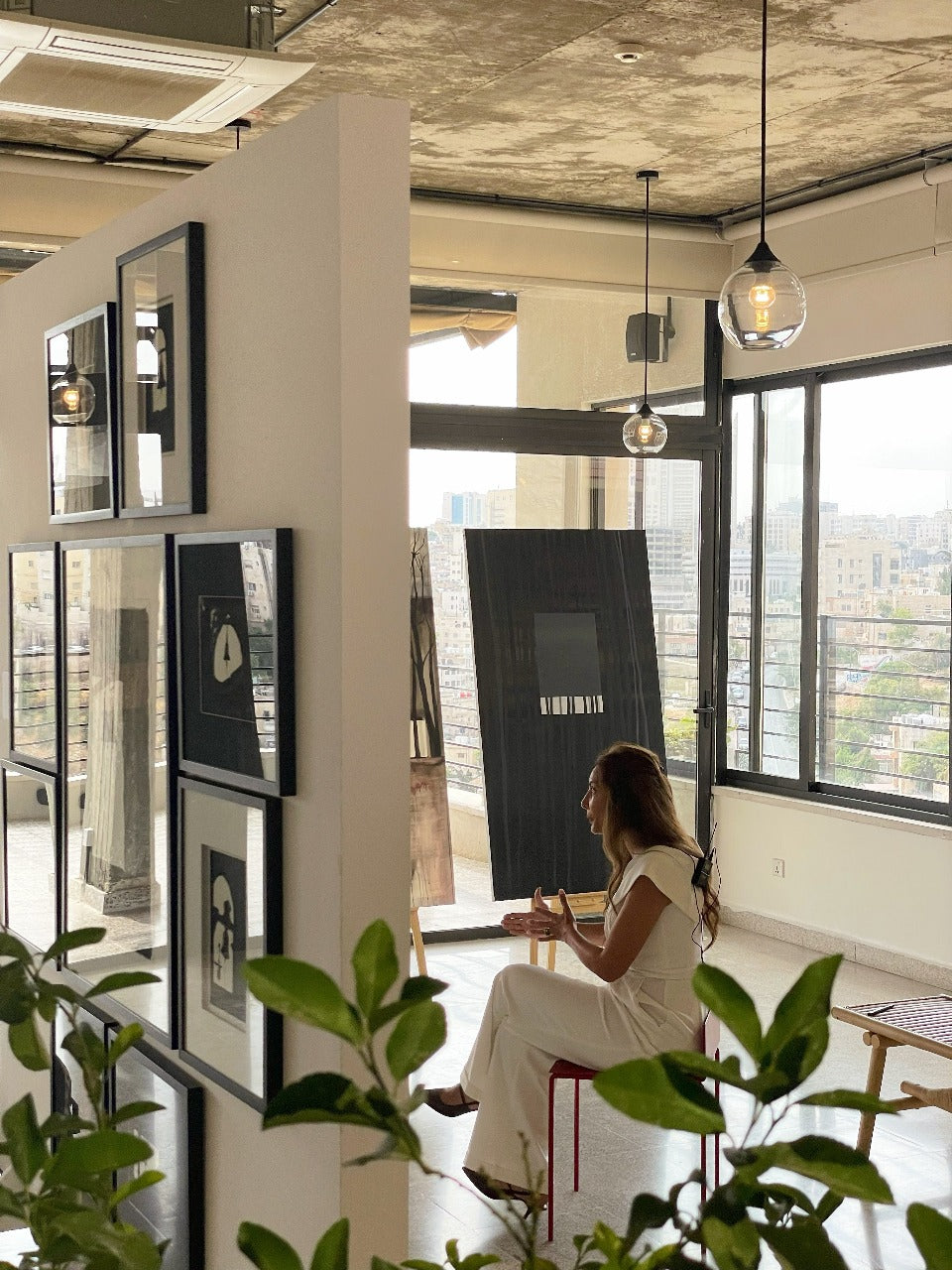
Ink, memory, and the architecture of emotion
Since I first learned to draw, I’ve drawn faces. I don’t know why. They appeared without invitation — one after another, as if born from each other. Some arrived fully formed; others emerged slowly, as though remembering themselves through the stroke of ink.
At the time, I didn’t question it. I followed the line.
Only much later did I begin to wonder what these faces were trying to tell me. I’m still not sure I fully understand. But I’ve learned not to interrupt them.
They multiply — not out of aesthetic choice, but necessity. Because no single face can carry the weight of all that it holds. Emotions overlap. Stories blur. Memory folds into expression. Identity fractures and reforms. And so the drawing continues — one face becoming another, like layers of time unfolding within the same moment.
I work in black ink on white paper for a reason. Ink is unforgiving. It doesn’t allow for hesitation or revision. It captures the immediacy of thought, the finality of feeling. Black and white are not empty of color — they are filled with everything unsaid. A form of restraint that invites intensity. A language without distraction.
These faces are not portraits. They are structures — emotional architectures built from line and silence. They carry the residue of women I’ve known, loved, heard, remembered. Their expressions are not invented; they are inherited. Carried. Echoed. Some are joyful. Others ache. All of them insist on being seen — even if only partially, even if only for a moment.
Why do I paint faces that multiply?
Because emotion is not linear.
Because memory is not singular.
Because we are not made to fit into one fixed shape.
Each drawing is an attempt to hold what overflows.
To honor what cannot be simplified.
To listen to what repeats itself in the quiet.
And perhaps — to leave space for the face that hasn’t yet arrived.